
Qualifying Qualia
Defending my Kanting Qualia article against Pete Mandik


In case you missed the exchange so far, Pete Mandik is a proponent of “qualia quietism” — the idea that qualia talk is circular and vacuous, so the realism vs illusionism debate isn’t really about anything.

Then I stuck my neck out defending a kind of phenomenal realism using Kantian resources…

Mandik replied, arguing that my defense fails due to circularity, infinite regress, triviality, and vacuity. Go me! He also quipped:
“While I think it’s fair and accurate to map Nagel onto Kant like this, there’s no way to do so without getting magic fairy dust all over your clothes.”
I want to dig my heels in a bit, while conceding some ground, for I can’t help but feel that our views aren’t altogether that different. I can shake the infinite regress pretty easily. The jury is out on whether I can swerve the other charges.
Note: In this article, I’m less interested in what Kant actually thought than how he might inspire certain kinds of responses in the present debate.
What I’m defending
Just to give some context to my project here, I shouldn’t be read as a traditional phenomenal realist. I’m trying to move past traditional conceptions without throwing the baby out with the bath water. I want to see if there is an innocuous sense of “phenomenal” that realists, illusionists and quietists could in principle agree on, even if it involves giving up orthodoxy.
I’ve argued that phenomenal properties needn’t be:
Infallible
Indubitable
Ineffable
Intrinsic
Non-physical
Non-representational
Instead, I argue qualia are appearances. But what kind of appearances?
Doxastic vs phenomenal appearances
Mandik points out that it won’t do to simply identify phenomenal properties with appearances because there are two kinds of appearances that we might have in mind, doxastic or phenomenal. Mandik argues:
[I]t’s the doxastic sense of appearing that has any chance of fortifying phenomenal realism as something even remotely indubitable. […] Doubting is doxastic. So, even if one doubts that things are as they appear, […] there is some doubting going on, and that episode of doubting […] is a doxastic appearing.
Now let’s briefly explore the distinction between phenomenal and doxastic appearances. Doxastic appearances are going to involve propositional or otherwise conceptual content—it doxastically appears to me that “that is a tree” if I have an active or occurrent disposition to believe “that is a tree.” So the whole account of doxastic appearances need only involve propositional/conceptual content and whatever conditions currently and actively dispose one to believe such and such, even if you have reason not to commit to such and such being true.
So what do phenomenal appearances involve over and above doxastic appearances? Phenomenal appearances involve a perceptual mode of representation. So visual content is picture-like, auditory content is soundscape-like, and so on.
A phenomenal realist will likely want to identify phenomenal properties with phenomenal appearances, not merely doxastic ones. However, I don’t think matters are quite so straightforward. I can imagine three broad strategies for the Kant-style phenomenal realist (K-phenomenal realist hereafter).
Three strategies for the K-phenomenal realist
1. Resort to traditional phenomenal realism
Strategy one for the K-phenomenal realist is to concede this point to Mandik and hold my hands up “you caught me, I’m just a traditional phenomenal realist… Mary learns something new and p-zombies are metaphysically possible.” Perhaps we could sprinkle a little intrinsicality and ineffability on there while we’re at it.
I’m not at all interested in this option.
2. Accept the distinction while deflating phenomenal properties
Strategy two is to opt for a more deflationary account of phenomenal properties while accepting they are still something over and above the properties of doxastic appearances.
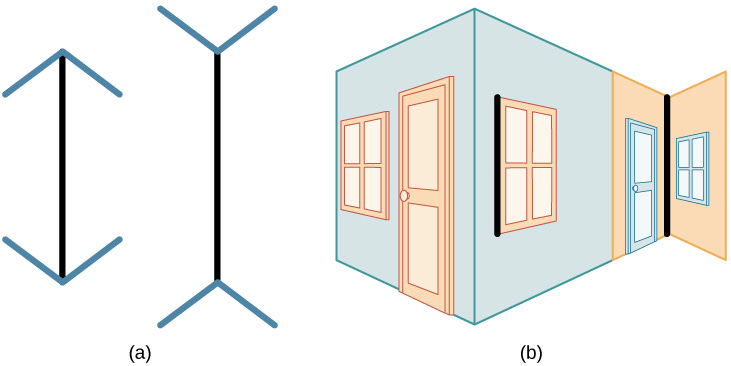
How might one argue for this? As Mandik points out, recalcitrant illusions like the Müller-Lyer illusion are cited as examples of places where how things look come apart from what doxastically seems to be the case. I’m sympathetic to distinguishing between appearances that have a perceptual mode on the one hand and conceptual content I am disposed to affirm on the other. The Kantian about phenomenal properties could say it’s the former that’s being identified with Kantian “appearances,” not the latter.
An argument in favour of phenomenal appearances is the fact that perceptual states probably arrived on the evolutionary scene prior to beliefs. It’s hard to have beliefs about the world that you can’t yet perceive! At best perceptions evolved simultaneously with some low grade belief or proto-belief. In any case, if perceptual appearances can be enjoyed without any kinds of belief-like states, then there is an instance of a phenomenal appearance that is not a doxastic appearance.
The key thing to point out here is that I’m attracted to this strategy to the extent that the world itself is what appears, not some mental copy of it. So phenomenal properties are at least deflated to that extent.
3. Reduce phenomenal appearances to doxastic appearances
This strategy would be to say that phenomenal appearances exist, but they are just doxastic appearances (or a subset thereof). Is a non-doxastic notion of appearance built into Kantian phenomena? Not necessarily. If we can recover the world of lived experience through occurrent dispositions to believe, straight-up believings, or deployments of concepts, then this ought to suffice.
Kant argues that certain a priori conditions of experience are necessary and inescapable. Such a priori structures could be explicated in terms of doxastic appearances. This would be a legitimate way of preserving the way things appear in a way that allows them to diverge from how things really are. This all sounds suitably Kantian.
I take it that we’d still want to maintain a distinction between doxastic appearances that involve perceptual content and ones that don’t, but all this would have to be done without introducing a theoretical intermediary between the raw chaotic inputs of the world and our conceptual organisations of it.
Escaping the dreaded term circle
Mandik asserts that my attempt to escape the term circle ultimately fails:
Guy suggests that Kantian phenomena can escape the phenomenal term circle in part because “phenomena” is defined contrastively against “noumena,” but this is of no help at all. “Noumena” is defined entirely negatively as what is outside of or independent of phenomenal appearances, and defining A as not B doesn’t help if we don’t already have some independent grasp of what B was supposed to be. What are zorbs? Well, I can tell you one thing about zorbs: they aren’t blorbs! Gee, thanks. Kantian phenomena aren’t an antidote to 20th century circularities endemic to “phenomenal consciousness”, they are major component of the etiology.
In Kanting Qualia, I gave a three-way distinction between (i) the way the world appears to me, (ii) the way the world appears to someone other than me, and (iii) the way the world is independent of how it appears to anyone. I think we need phenomenal properties in some sense or other to distinguish between Mandik as experienced from Mandik’s point of view and Mandik as experienced from my point of view. So on my view, a world without phenomenal properties in any sense is either one where I might sometimes mistake myself for Pete and Pete might sometimes mistake himself for Britney. Or it is one where Britney, Pete and I respectively don’t seem to be anyone in particular.
In any case, given that I’ve outlined three ways for the K-phenomenal realist to make sense of "appearances,” even if we’re undecided about which account (if any) is correct, we can distinguish appearances from non-appearances. When I look at the tree, I’m being appeared to by the tree. When I don’t look at the tree, I’m not.
In light of my earlier discussion of phenomenal vs doxastic appearances, I said that phenomenal appearances are appearances that involve a perceptual mode. I believe this says something more informative than the dreaded term circle does. But I can say more…
Three accounts of phenomenal properties
When I talk about phenomenal properties in the sense I’m advocating, I’ve consistently said phenomenal properties might be “in here” (in the mind), “out there” (outside of the mind) or both (given a disjunctivist account).
One way of spelling out the in here option is to say that phenomenal character is just the deploying of concepts. This preserves the intuition that phenomenal properties are in the mind without committing to some Cartesian theatre. What bothers me about this route is the fact that it seems to dissolve the distinction between perceivings and believings. If that distinction can be maintained then I’m game.
My favourite way of unpacking the out there option is to say that qualities of experience, say, the redness and roundness of a frisbee I can see are external to the mind ala direct realism. These qualities are external to an experience in the sense that they are outside of the skull, yet internal to an experience in the sense that they feature within the experience, which is of the external world. I think people gave up on direct realism too quickly, and that the so-called hard problem stems from the terrible idea to posit a mental copy of each quality—mental squareness as well as squareness—when one will suffice, in this example, just plain old squareness. What bothers me about this account is that non-perceptual “experiences” don’t qualify as being phenomenally conscious. That's a problem.
The both option is a disjunctivist account whereby the qualitative character of a non-conceptual, perceptual experience is explained in terms of external qualities that feature in experiences, but where the qualitative character of a conceptual, non-perceptual experience is explained in terms of exercising various concepts. This seems a little unparsimonious, but has some advantages. On this view, a being that lacks the ability to conceptualise can have phenomenal consciousness nonetheless, without the ability to conceptualise by directly perceiving the world. Conversely, those with the requisite conceptual apparatus can be phenomenally conscious about non-perceptual states by deploying concepts which have been obtained through perception that are accessible as concepts via memory. Plus, such conceptually competent folk can be phenomenally conscious about perceptual, conceptual states by having both access to the qualities of the world that are further coloured by interpretation and conceptualisation.
A clear break from the term circle
One move I’m becoming increasingly more tempted to make is to identify the innocuous phenomenal properties that I’m wanting to preserve with the having of concepts. That is, to be in a phenomenal state is to be in a conceptual state, and to instantiate phenomenal properties is to instantiate whatever cognitively accessible properties are instantiated when conceptualising.
Phenomenal properties are usually supposed to be common to perceptual experiences and other states like imaginings, dreamings, and hallucinations. The having of concepts seems to be the one thing that is common to all of these kinds of conscious states, which is a reason for making such an identification.
Clarifying my point about externalism
Mandik speaks a lot of sense about externalism:
I don’t see any way around the fact that there are always going to be some beliefs or other that we have without being able to give a bullshit-free account of why we have them.
I wouldn’t disagree with any of his reasoning here. But I wasn’t arguing against externalism to begin with. It was the compatibility of “wholesale externalism” and illusionism that I was taking issue with.
Here’s the problem I was trying to articulate:
K-phenomenal realist: K-phenomenal properties or “appearances” might be in the mind, might be in the world, or might be a combination of both, but they exist somewhere.
Super-illusionist: K-phenomenal properties or “appearances” don’t exist anywhere at all; neither in the mind nor out there in the world!”
K-phenomenal realist: But how can they be illusory if appearances don’t exist anywhere? If they existed “in here” then we might mistake them for being “out there.” Conversely, if they are “out there, we might mistake them for being “in here.” But if they don’t exist anywhere at all, then how can we be subject to the illusion that they exist somewhere? What is it that we are even mistaking for phenomenal properties?
Admittedly, what I initially said in the paragraphs Mandik quoted was quite confusing and arguably a red herring. So let’s nip that in the bud.
The possibility of illusions, phenomenal and otherwise
To get us back on track, I’ve not been trying to defend an internalist account of justification. I have however been trying to answer the questions:
How are illusions possible in general?
When undergoing an illusory experience, what is being mistaken for something else?
When subject to a phenomenal illusion, what is being mistaken for a phenomenal property?
Phenomenal realists can answer those questions like this… “That’s easy. Illusions are possible because the world is phenomenally ambiguous. That is, there are multiple states of the world that can cause us to have what seems to be the very same experience. Call this the Phenomenal Ambiguity Thesis. Given phenomenal ambiguity, sometimes we get tricked or confused between which of the multiple (sometimes drastically different) ways the world might be in order to give us an experience like this one.”
For example, I am currently looking out of my patio doors into my garden. There is a way that the world currently is that causes me to have this particular experience of it. But you can imagine a scenario where someone printed out a big picture of my garden, set it up outside my doors, and paid a lighting specialist to light it so realistically that when I look out of my doors from this very angle, I’d have had an experience indistinguishable from this one. Two very different worldly states, an indistinguishable phenomenal result. Being tricked in such a way can therefore be explained in terms of phenomenal ambiguity.
Many of these illusions that you see, of which the Müller-Lyer is a paradigm case, exploit your mind’s tendency to interpret a two dimensional image in three dimensions. The third dimension introduces depth and perspective. Now we all know that big objects far away SEEM smaller than small objects that are very close. Thus two lines that are the same length but where one is interpreted as being further away means we are inclined to see the apparently more distant one as being longer. So one possible, albeit partial, explanation of this is that the arrows and inverted arrows in the Müller-Lyer are tricking your mind into seeing depth. This is even more apparent when the Müller-Lyer is actually depicting three dimensions (Pay attention to this the next time you come across one of these images… like now).
Some images even trick us into thinking we see something moving. This is done by placing some “shadows” in places they shouldn’t be, making your mind try all sorts to make sense of it, adjusting its interpretation back and forth, giving the illusion of movement. All of this is perfectly explicable by appeal to my phenomenal ambiguity thesis.
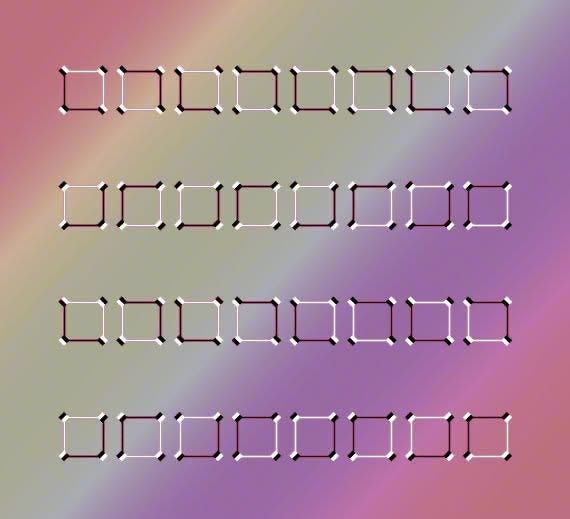
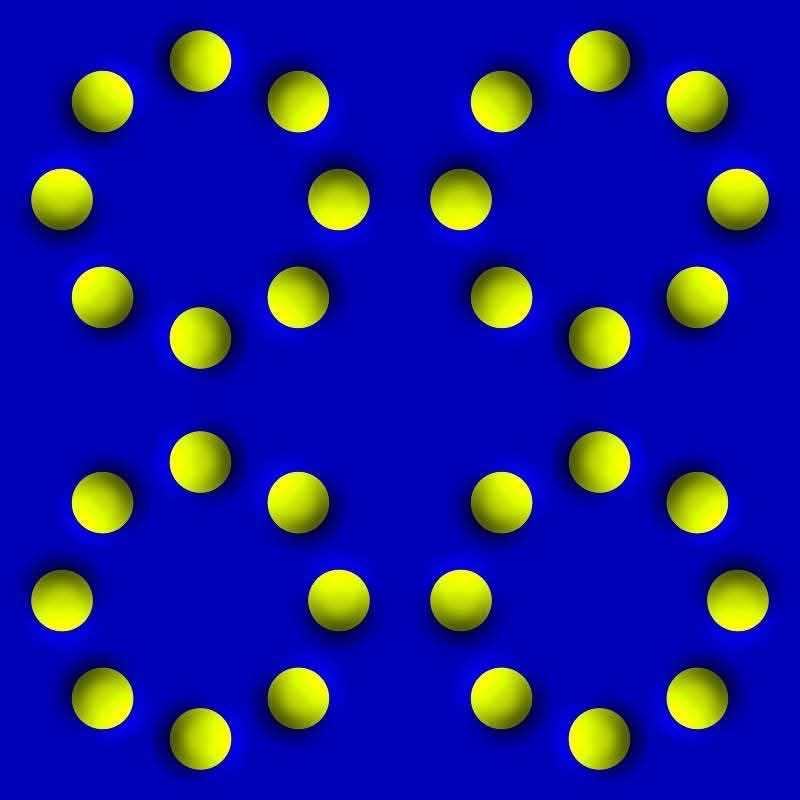
Relating this back to the discussion in hand, I say there is something that appears to us in experience that can lead to error due to its ambiguity. This same thing, according to me, is what would be needed to explain the possibility of illusion—one thing being confused for another. But illusionism disallows this.
My qualm is that illusionsists can’t appeal to phenomenal properties (in my sense or the classical sense) to explain illusions, so they owe us a different account. So how are illusions possible, generally speaking? And what is being mistaken for a phenomenal property when someone is subject to a phenomenal illusion? A doxastic property perhaps? Or the deploying of a concept? Whatever they say needs to rule out my three sketches of phenomenal properties as they relate to perceptual and conceptual content.
Qualia quietists don’t even agree that there is some well defined thing that phenomenal realists take to exist, which illusionists take to be an illusion. So it’s not clear to me how they will answer my questions about what’s happening in cases of normal, non-phenomenal illusion either. Since I’m attempting to give an account that might be acceptable to qualia quietists, I’m trying to force them into the dilemma of agreeing with me on the one hand, or drying up their resources to explain regular illusions on the other.
What say you, Mandik?!
Talk of “inner eyes”
Mandik worries my account requires an “inner eye” inspecting inner properties.
The picture Guy sketches in that material I just quoted seems like he’s suggesting we need some phenomenal properties made available to the inner-eye, and once made available to the introspecting person, those properties would thereby be available to that person to cite in requests for justification. […]
So, if we asked Smith how he knows that his red quale and his blue quale are different quale, is he going to cite another inner-eye, one that’s inside of his first inner-eye? A homunculus inside the homunculus?
I don’t think we need to invoke inner eyes or homunculi here. First-order perception already involves access to qualities like color, shape, texture, sound, etc. Neither of these require a mental copy in a Cartesian theatre, or an infinite series of homunculi. What an experience is like can be explained, at least in part, by appealing to the qualities/properties of external objects.
Now I’ve said more about both my ambitions and what I take phenomenal properties to be, I hope it’s clear that I’m not into inner eyes or nested homunculi.
Trivial or fallacious
In Kanting Qualia, I said “it’s incoherent to say we can experience the world as it is completely independent of experience.” According to Mandik,
[W]hat’s alleged to be incoherent is something expressing the negation of a tautology, a denial of an utterly undeniable logical truth who’s core logical form is “P -> ~~P,” [...] Saying such things wouldn’t convey any information to anyone who didn’t already know how conditionals and double-negation work in English.
There’s another disambiguation worth considering, […] the core logic of the allegedly indubitable claim is a modal claim whose core form is “If P then necessarily P”. The instances of this form having to do with experience or representation would be something like “nothing you experience could have existed unexperienced” [...].
Fair enough. I blame language! Here’s a less ambiguous way of stating the incoherence:
“Some experiences of the world are independent of experiences.”
So according to Mandik, what I’m saying is so trivial that it is no defence of phenomenal properties. But let’s not forget what the rest of my argument, which went something like this:
I identified k-phenomenal properties with appearances. So, to deny k-phenomenal properties would be to deny appearances
I explored how someone could attempt to deny them. How? By bypassing appearances of the world and accessing the world as it is independent of appearances.
I argued that we can’t bypass our experiences and go directly to the world, because the way we are in contact with the world is by perceptually experiencing it. So this is a reductio of k-phenomenal property eliminativism. To reject k-phenomenal properties is to say “some experiences of the world are independent of experiences”
So I was backing up a substantive point by showing how rejecting it entails rejecting a trivial truth, or worse, accepting a contradiction.
Kant’s point is that we don’t, nay, can’t know what the world is like unexperienced, except for something like “whatever the world is like, we know that it is such that it gives us experiences like this and that.”

To bolster this point in more innocuous terms, a visual experience of a tree is going to involve the angle (or two angles if you have two eyes) from which the tree is viewed, amongst other things. This angle isn’t part of the tree, it’s part of your experience of the tree. So the incoherence I was gesturing towards would be like saying “I can see the tree without seeing it from a particular angle.”
In sum
I have argued that phenomenal properties are properties of appearances, and that the distinction between phenomenal and doxastic appearances is far from clear-cut. In fact, all avenues I explored seem to be open to friends of k-phenomenal properties, though some might be more friendly to qualia quietists than others.
I also explored some ways of escaping the term circle in terms that I think could be acceptable to the qualia quietist, except for the fact they may not have to be quietists about qualia in my sense! They can continue to be quietists about traditional qualia, but could in principle agree that there is an acceptable notion in the vicinity.
Perhaps a less misleading assessment of what I’ve done is to have dispensed with “qualia” as such while having provided a framework for preserving a non-traditional kind of phenomenal realism.
While some might be tempted to tell me that I’m not really a phenomenal realist in any way that matters—that I’m changing the subject and might as well use different terminology—I believe I’m being true to the terms that feature in the term circle.
In my view, we can change theories radically without changing the subject. Take theories of gravity for instance. Newtonian and Einsteinian gravity differ greatly in their theoretical content, as does each of those with quantum theories like Loop quantum gravity. But in each case, it's the same phenomenon that is the target of explanation.
In the present case, it's just that the phenomenon in question is that there are any phenomena at all.
Nice article, and shout out to DJ Im-Rock!
FWIW, I wonder if the way you frame the challenge for illusionists may beg the question against them somewhat? Maybe I'm wrong, but as I understand Keith Frankish, for example (perhaps most clearly in his Quining Diet Qualia paper but also in his 2016 JCS and later articles), the illusion ultimately comes down to a false judgment that intentional states have some added element of intrinsic subjectivity, ineffability, indubitability, etc. So if you stipulate that what you have in mind is a definition of phenomenal properties/states that excludes those, then perhaps the illusionist would respond that you are incorrect in thinking your definition really is so innocent, as for example François Kammerer did (https://philpapers.org/rec/KAMDCA-2) in a recent paper.
Of course realists, including Eric Schwitzgebel (https://substack.com/@eschwitz/p-158531817) as well as David Chalmers (e.g. this from his paper on The Meta-Problem of Consciousness: "To generate the hard problem of consciousness, all we need is the basic fact that there is something it is like to be us. We do not need further claims about intrinsicness, non-physicality, and so on.") etc. will hold - as you do - that those extra claims are not necessary and not what they mean by phenomenal / qualia / what it's like, leading to an impasse on finding a neutral explanandum (and potentially some motivation for quietism?)
Had time to finish this , and I tentatively agree with nearly all of it; that wasn't the case for your previous piece, and I suspect that the attempt to draw in Kant does not help your argument.
Most of what you are suggesting could be mapped, with some terminological changes, to what I have been arguing. We can be sort-of realist about appearances themselves, because they come with so few ontological commitments, but we can be eliminatiivists about many of the things posited to be behind those appearances.
I don't think "illusion" is a very good term for this, because an illusion often involves making faulty assumptions (usually involuntary ones) about what is behind the appearance. My preferred term, virtualism, covers the possibility that, in many cases, there is nothing at all behind the appearance, just the appearance machinery doings its own thing without external input. Or, in some cases, adding embellishments that are orthogonal to the externalities. Not so much misrepresenting wavelength as colour or creating an illusion, but adding a whole new colour logic and semantic significance to wavelength ratios.
In addition to my recent posts on triplism, I posted earlier on the idea of a likoscope, which is a hypothetical device that does its best to retrieve perceptual content from brains. I think a likoscope can retrieve content that fits the bill for a rough mapping to "qualia", without their being any real entity being retrieved, because the device itself performs the representational twist that confuses our ontological intuitions.
In "The Blue Square", second in the likoscope series, I have a zombie in the first room of the lab, asked to imagine a blue square. Nothing blue there, no square there. I have a likoscope in the second room, displaying the extracted blue square, or what you would call the "appearance". The capacity to extract the blueness is a real feature of the first room, despite their being nothing blue there, and it is made real in a new, somewhat spurious-but-useful way in the second room. I have the third room sealed; it holds the intentional target of the imaginary effort, covering the externalist dimension. The contents of the third room make no difference to anything. This is imagination, not perception.
The extracted blue square is not "like" the thing it is extracted from (a physical brain), in most senses of "like", but it is exactly "like" what the zombie imagined (a blue square), in another sense, and it will tell you so. It is not necessarily like anything in the third room, as there might not be any intentional target in the usual sense.
Of course, it makes no difference if we substitute a human in the first room, because zombies and humans have exactly the same appearance being extracted. The zombie only differs in lacking some incoherent fiction that makes the blue-square appearance "phenomenally real" in some way that does no real work (like changing the contents of the third room)
The blueness being extracted can feel very precise, but almost certainly isn't, because a range of matches could all be considered acceptable. It doesn't rise to the level of being "indutible". But it is "intrinsic", because the "likeness" only really works for the subject in the first room, not for outside observers. It is "ineffable", because it doesn't really exist except in a representational sense, and nothing blue would be found if we searched the first room. It could be "irreducible", in the weak sense of resisting Jacksonian derivation; the same would not be true of the square shape, so subjective colours do indeed pose epistemic challenges. It is non-physical, in the sense that nothing in the first room is physically blue (reflecting or emitting photons or the required wavelength), and nothing is blue at all in the entire set-up if we switch off the likoscope. The blueness consists of a natural interpretation of the relevant neural activity from one perspective, and is non-physical and private in that sense. It is not non-physical in any sense that need bother a physicalist.
In other words, this real property in the first room, which we might vaguely call an imaginary blue square, has most of the properties of a quale, but without contradicting physicalism. What stops us from being happier with the match to "qualia" has more to do with the mess that has gone before than any real problem with accounting for real, intrinsic, ineffable, irreducible, sort-of non-physical appearances.
https://zinbiel.substack.com/p/a-blue-square?r=2ep5a0